
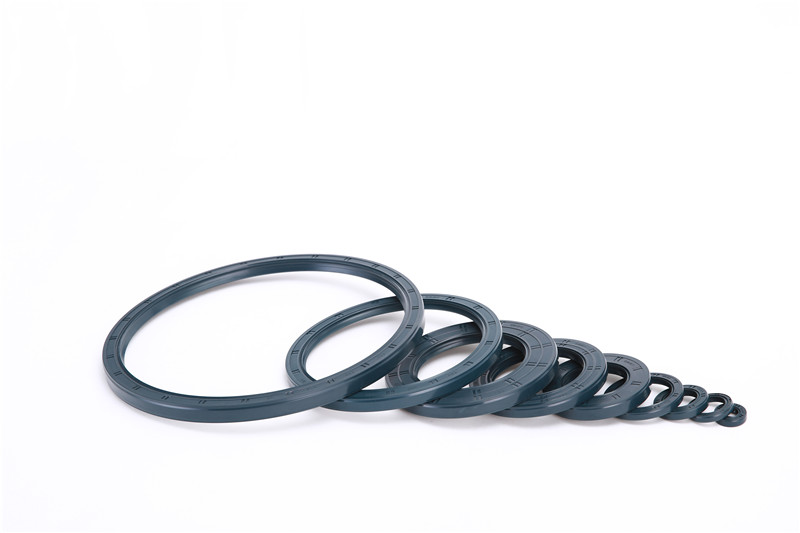
In the demanding environments of modern industry, the reliability and longevity of components like oil seals have become critical factors in maintaining operational efficiency and reducing maintenance costs. Recent advancements in oil seal technology are setting new standards for durability and performance, promising extended life expectancy even under the harshest conditions.
Oil seals, essential for preventing fluid leakage and contamination in machinery, play a vital role across a broad range of industries including metallurgy, construction machinery, mining, and aviation. Their ability to withstand high pressure, extreme temperatures, and abrasive environments directly impacts the lifespan of equipment and, by extension, the productivity and safety of industrial operations.
A leader in this field has embraced world-class quality standards in mould development, rubber research and development (R&D), and rigorous production and inspection processes to push the boundaries of oil seal performance. This company's commitment to excellence is reflected in the superior quality of its products, which have earned wide acceptance in metallurgy and construction machinery sectors, as well as in the more extreme environments encountered in mining and aviation.
**Technological Excellence in Design and Materials**
Achieving longer oil seal life expectancy starts with innovative design and the selection of high-performance materials. Rubber compounds used in seal manufacturing must exhibit excellent elasticity, chemical resistance, and the ability to maintain their properties over time despite exposure to heat, oil, and abrasive particles.
The company’s R&D team has pioneered advanced formulations tailored to specific industrial applications. These rubber compounds undergo intensive testing to ensure optimal hardness, durability, and resistance to environmental degradation. The result is a line of seals that maintain tight sealing capabilities even after prolonged exposure to operational stresses.
In addition to material innovation, precision mould development ensures dimensional accuracy and consistent quality in seal production. By employing state-of-the-art moulding techniques, defects such as surface imperfections and inconsistencies that often lead to premature seal failure are minimized. This meticulous approach results in seals that fit machinery components precisely, reducing wear and tear caused by misalignment and vibration.
**Rigorous Production and Quality Control**
The commitment to excellence continues throughout the production and inspection phases. Every batch of oil seals undergoes thorough evaluation using advanced detection technologies to identify any defects or performance issues before shipment. This rigorous quality control process ensures that only products meeting stringent standards reach customers, minimizing the risk of operational failures caused by seal defects.
By adopting these comprehensive quality protocols, the company guarantees oil seals that not only meet but often exceed industry requirements. This reliability has been affirmed by clients operating in sectors where downtime can be extremely costly or hazardous, such as mining operations involving heavy-duty earth-moving equipment and aviation components subject to high levels of mechanical stress.
**Performance Under Extreme Conditions**
One of the distinguishing features of these oil seals is their proven performance in extreme conditions. Mining machinery, for example, often operates in abrasive, dusty, and high-load environments. Oil seals used in such applications must resist infiltration by particulate matter while maintaining sealing integrity to prevent lubricant loss and contamination. Similarly, aviation components demand seals that can endure rapid temperature fluctuations and exposure to various fluids without compromising safety and functionality.
The company’s seals have demonstrated outstanding resilience in these challenging settings. Feedback from clients in mining and aviation sectors highlights extended maintenance intervals and improved equipment uptime, directly attributable to the superior seal durability.
**Environmental and Economic Benefits**
Longer-lasting oil seals also contribute to sustainability goals by reducing the frequency of seal replacement and the associated wastage. This reduces the environmental impact of manufacturing and disposal and supports resource-efficient industrial practices.
From an economic perspective, extending oil seal life expectancy lowers maintenance costs and operational downtime. Equipment owners benefit from enhanced productivity and reduced risk of catastrophic failures that can result from leaking seals.
**Future Outlook**
Continued investment in rubber R&D and mould technology promises further innovations in oil seal performance. With the industrial landscape evolving—incorporating more automation, higher production speeds, and increasingly harsh operating parameters—the demand for durable, high-quality sealing solutions is set to rise.
This company remains at the forefront, committed to advancing quality standards and delivering products that empower industries to operate more reliably and efficiently. By focusing on scientific research, precision manufacturing, and stringent quality controls, the future of oil seal technology looks promising with prolonged life expectancy and enhanced performance.
---
In conclusion, the enhancement of oil seal life expectancy marks a significant advancement for multiple industries reliant on reliable machinery operation. Through world-class quality standards in mould development, rubber R&D, and manufacturing excellence, these robust seals are now capable of performing exceptionally well in some of the most demanding industrial environments, including metallurgy, construction machinery, mining, and aviation. This progress not only improves operational efficiency and safety but also contributes to sustainable industrial practices and economic benefits, signaling a positive direction for industrial maintenance and component manufacturing.